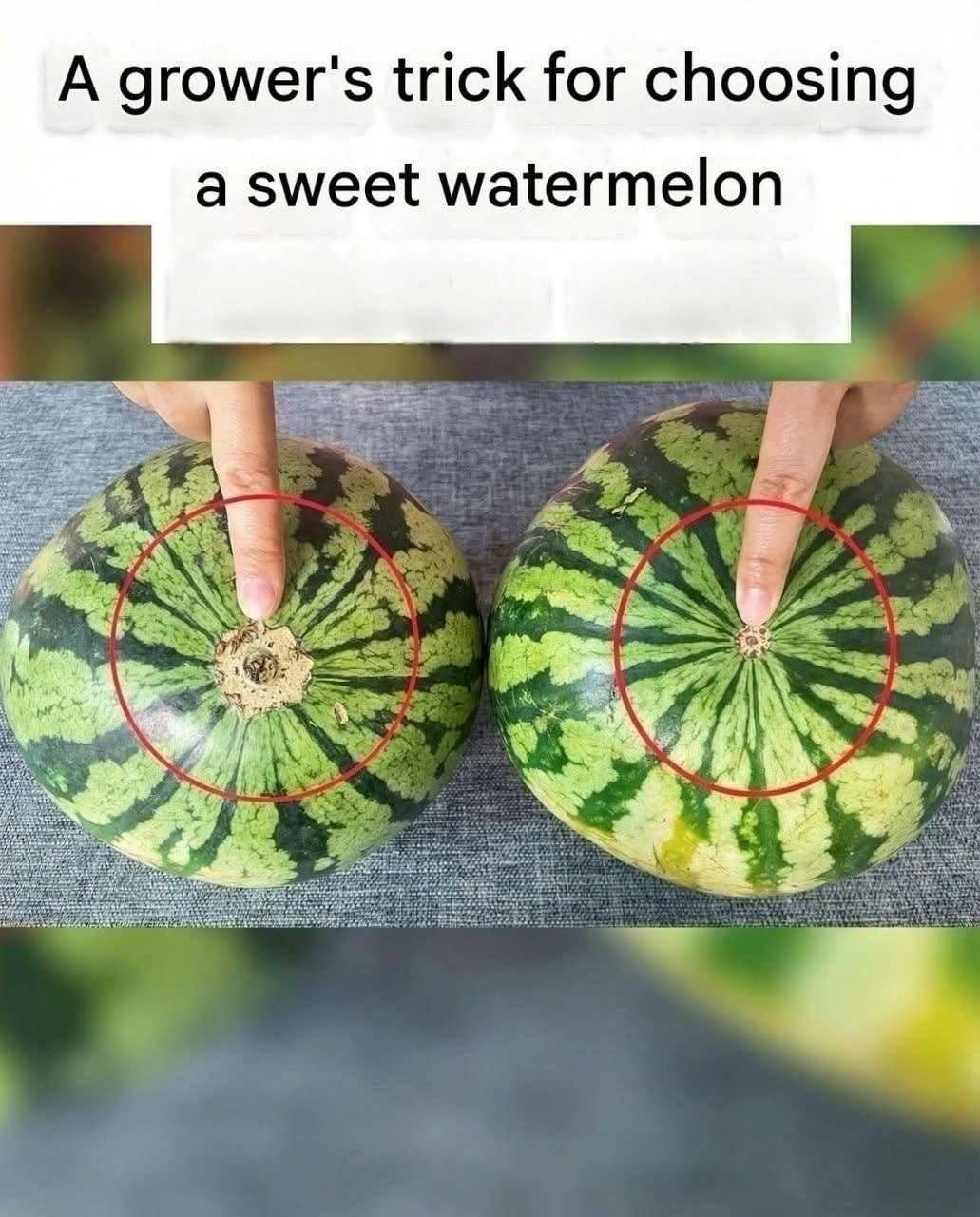
1.Examine the Field Spot Color:Visual Check 1.
Flip the watermelon over to locate the resting spot. Look for a creamy butter-yellow or deep golden-yellow color. If the spot is white, pale, or non-existent, put it back—it was picked too early.
2.Inspect Skin Sheen and Striping:Visual Check 2.
Avoid shiny watermelons. Choose a fruit with a dull, matte finish and dark green, high-contrast stripes. A glossy rind means the fruit is still immature.
3.Look for Sugar Webbing and Stem Condition:Visual Check 3.
Check for rough, brown webbing scars (a sign of high pollination and sugar content). If a stem is attached, ensure it is completely dry and brown rather than green.
4.Perform Density and Acoustic Tap Test:Acoustic & Weight Check.
Pick up two watermelons of equal size; choose the heavier one (indicating high water and sugar concentration). Knock on the side with your knuckles: a ripe watermelon produces a deep, hollow resonance, whereas an unripe or overripe fruit produces a dull, flat thud.
🧊 Storing and Serving Guidelines
Room Temperature Storage: Whole, uncut watermelons store best at room temperature (55°F–70°F / 13°C–21°C) for up to 1 to 2 weeks. Keeping whole watermelons at room temperature preserves their lycopene and antioxidant levels.
Chilling Before Serving: For maximum refreshing flavor, chill whole watermelons in the refrigerator for 12 to 24 hours prior to slicing.
Post-Cut Refrigeration: Once sliced, cover cut surfaces tightly with plastic wrap or store cubes in airtight containers in the refrigerator for up to 3 to 4 days.
For Complete Cooking STEPS Please Head On Over To Next Page Or Open button (>)